


JARABILI, Charlie (c.1920-1985)
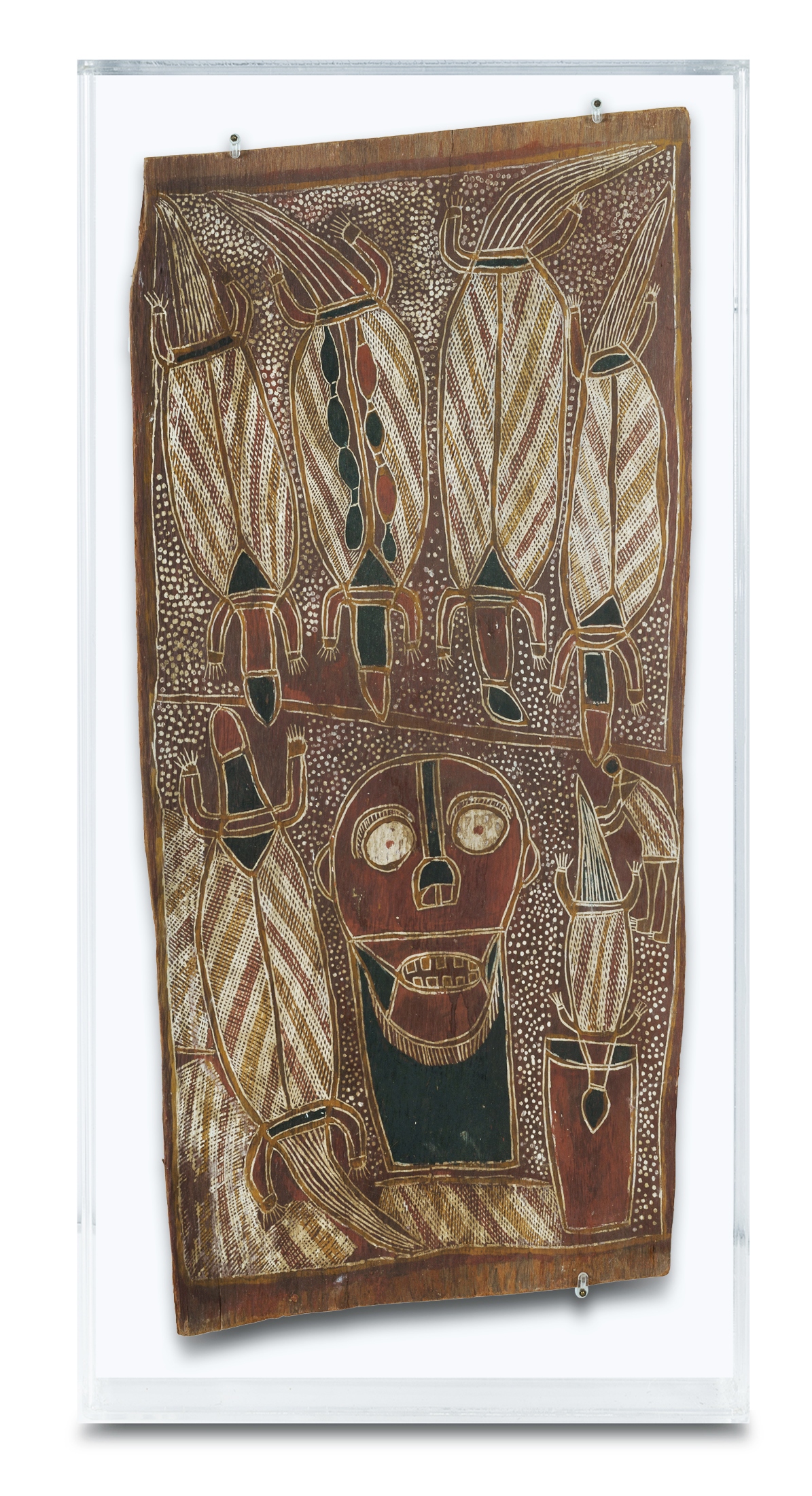
'Djalambu, Hollow Log Ceremony,' 1958.
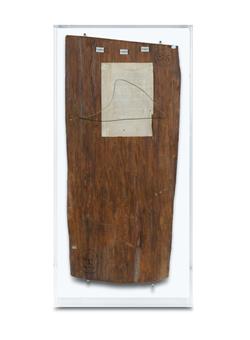
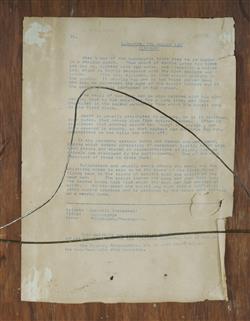
Bears Dorothy Bennett Collection number 35 together with extensive documentation on label on reverse
Natural Earth Pigments on Eucalyptus Bark
97x46cm
PROVENANCE:
Collection Mr H & Mrs P Wallace, Sydney.
OTHER NOTES:
According to the accompanying documentation this painting was collected at Maningrida in 1958. The documentation reads in part: 'When a man of the Gupapuynga tribe dies he is buried in a shallow grave. Then about 18 months later his bones are dug up painted with red ochre and placed in a hollow log which is highly decorated with the clan designs and totems. This log djalambu is then placed upright in the ground. It usually has one or two holes carved near the top to represent the eyes of the spirit looking out at the ceremony being performed in his honour. The skull of the dead man is also painted with his clan design kept by his relatives for a long time and then deposited in the sacred waterhole from which his spirit came in the first place. Death is usually attributed to sorcery as it is believed even today that nobody dies from natural causes. Often it is alleged that another person has 'sung' the victim and then revenge is sought so that payback can continue for many generations as one kills the other off. At the ceremony various songs and dances are performed during which totems consisting of paperbark tightly bound with bush string and shaped in representations of birds fish or animals are displayed to the participants. One of the most important of these is diver duck. Bullroarers are usually swung around the head and the whistling noise is said to be the sound of the diver ducks flying back to the island of spirits with the spirit of the dead man. The spirit leaves the body and goes back into the sacred water hole from which the dead man had emerged at birth. On his death the spirit may turn into a catfish or other marine creature and is captured by the diver duck sitting on a nearby tree'
Estimate $800-1,500