
VIEW 06
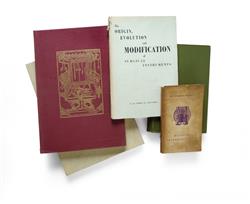
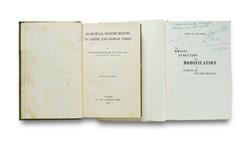
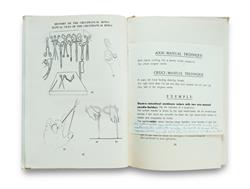

Four Volumes on Historical Surgical Instruments and Collections including a Reprint of 'Musaeum Tradescantianum'
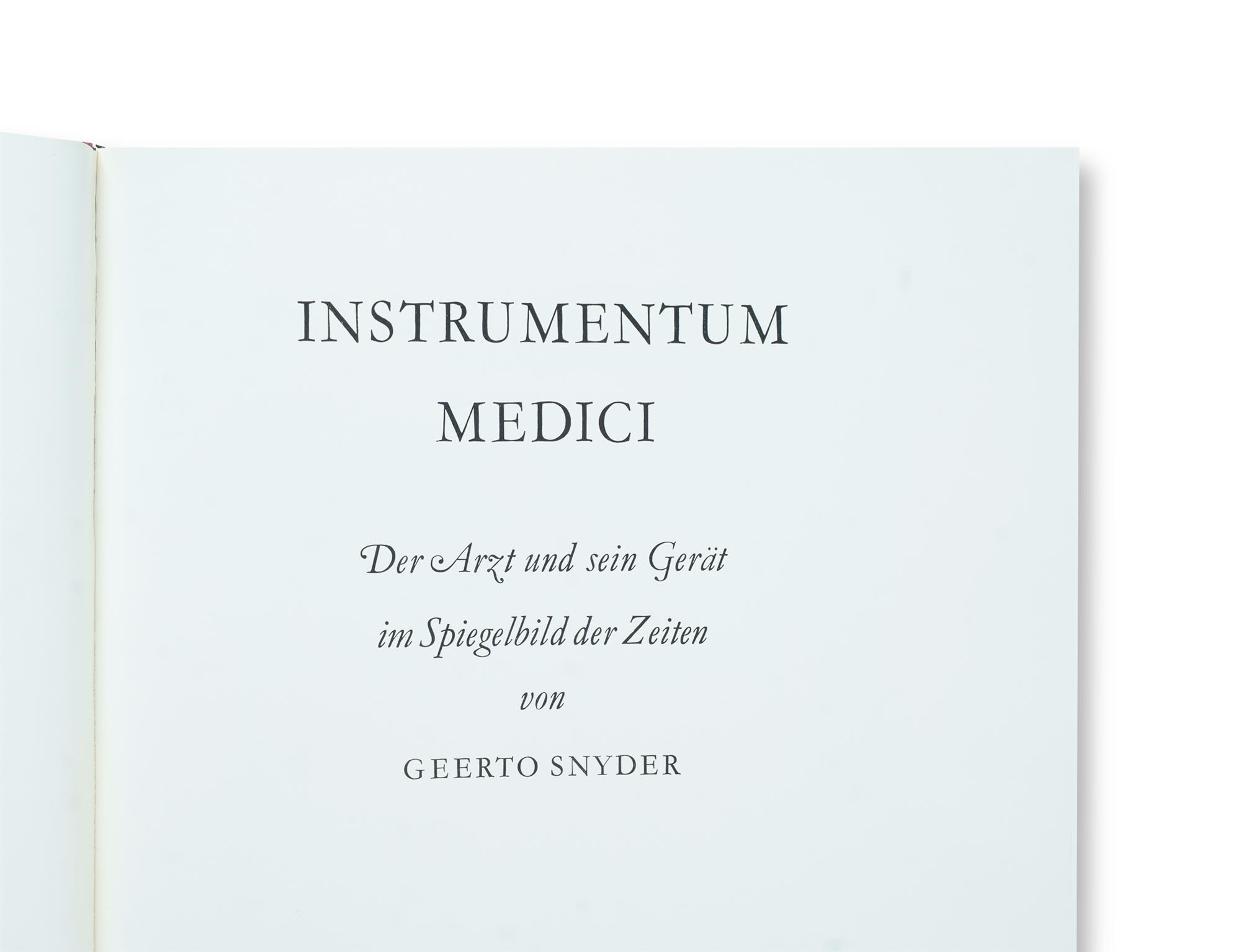
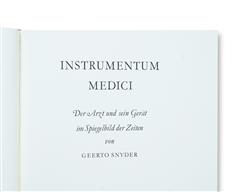
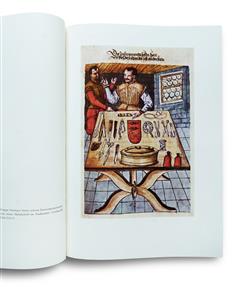
1) SNYDER, Geerto 'Instrumentum Medici: Der Arzt und sein Gerät im Spiegelbild der Zeiten von Geerto Snyder' (Instrumentum Medici: The Doctor and His Instrument in the Mirror of Time by Geerto Snyder)
Pub. GERMANY. Printed by CH Bochringer Sohn, Ingelheim am Rhein. 1972 in cream slip cover, in German 200pp.
Red buckram with gold embossed design to cover, and title to spine, some sunning to spine but clean copy, minor shelf wear loose 1972 reprint note. Bookplate: Ex Libris K.F. Russell (book 300x210mm)
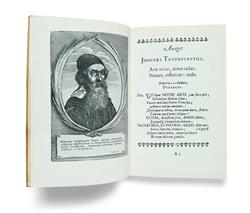
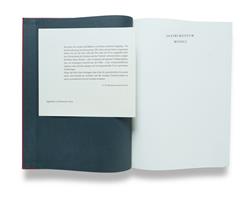
2) TRADESCANT, John 'Musaeum Tradescantianum: or, a collection of rarities preserved at South-Lambert neer London'.
Pub. LONDON: Printed for John Grismond, and are to be sold by Nathaneal Brooke at the Angel in Cornhill. M. DC. LVI. [1656]. OXFORD: Fredrick Hall, Printer to the University of Oxford 1925. A partial fasimile of the original catalogue prepared by R.T. Gunther. Old Ashmolean Reprints 1.
The catalogue was printed by the son of John Tradiscant who established the first physic garden in England, at South 'The Musaeum Tradescantianum: a reminiscence prepared for the reopening of a room [5 May 1925]; formerly the Musaeum Ashmoleanum, for the reception of the Lewis Evans collection of scientific instruments, on the three-hundredth anniversary of the year when John Tradescant dealt 'with all merchants from all places, but especially from Virginia, Bermudas, Newfoundland, Guinea, Binney, the Amizon, and the East Indies, for all manner of rare beasts, fowls and birds, shells, furs, and stones' (page before title)
'Pages 74 to 178 containing the remainder of the Catalogus Plantarum in Horo Iohannis Tredescanti mascentium, are ommited in this reprint of the Musæum Tradescantium.' Lambert. John senior died in about 1637.
'The last of the Tradescants died in 1662. On March 20, 1683, twelve cartloads of his rarities arrived at the Ashmolean Museum in Oxford, just one week after they had been shipped on to a Thames barge in London. The opening of the new Museums in the nineteenth century, one for science and one for Art and Archology, resulted in the temporary abandonment of the parent Museum, and in the loss of many treasures, the oldest Science Museum in Britain is again housing a Collection of Rarities, and for the purpose for which it was specially built is restored.' (2nd last page).
Printed paper jacket over board cover with heavy tanning and foxing to cover and end pages, a few chips to cover paper, inner pages have some foxing and tanning. Bookplates: Ex Libris Anatomica K.F. Russell (165x102mm)
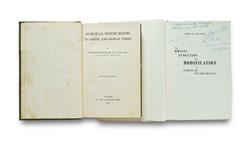
3) MILNE, John Stewart MA MD Aberd. 'Surgical Instruments in Greek and Roman Times'.
Pub. OXFORD: Clarendon Press 1907. Printed by Horace Hart M.A. Printer to the University, pp187 plus 54 plates.
Olive green buckram with gold embossed title to spine, some shelf wear, foxing and tanning. Olive green buckram with gold embossed title to spine, some shelf wear, foxing and tanning.
4) CURUTCHET, Dr Pedro D. 'The Origin, Evolution and Modification of Surgical Instruments'
Pub. BUENOS AIRES, Argentina 1964, 89pp.
Cream paper on board cover with printed title, break to the spine head, shelf wear with marks, some waving to first pages, minor foxing and tanning, presentation note to K.F. Russell in 1965 scripted to title page, notes scripted to insert p53. (165x250mm)
PROVENANCE:
Collection Late Kenneth F. Russell (1911-1987), Professor of Anatomy and Medical History, University of Melbourne.
Estimate $120-180