

GREGORY, George Frederick (1821-1887)
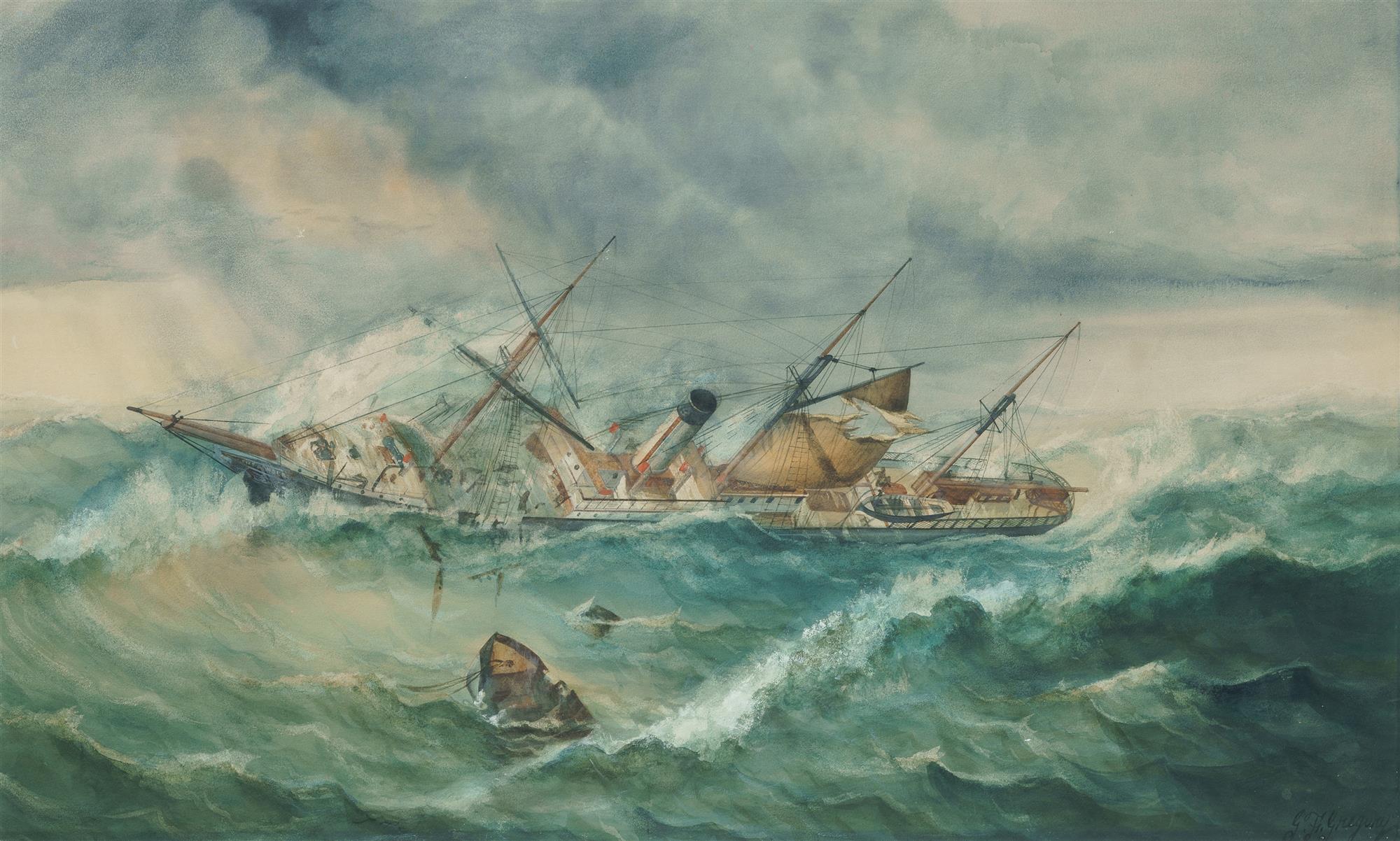
SS City of Melbourne, c.1876.
Signed lower right.
W/Clr & Gouache
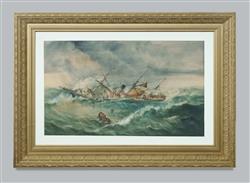
52x88cm (image) 85x120cm (frame)
PROVENANCE:
Mossgreen, Melbourne, 'The Maritime Collection of Desmond Adcock,' October 22nd 2013 (lot 180); John Hannan Collection of Marine Art.
OTHER NOTES:
At midnight on Saturday September 9th 1876, the City of Melbourne steamed out of Sydney Harbour bound for Melbourne. It was the height of the spring racing season, and the ship's most valuable cargo consisted of the cream of Australia's thoroughbred racehorses being transported to compete in the prestigious 1876 Melbourne Cup. As the ship approached the waters off Jervis Bay on Sunday afternoon, a southerly gale of unprecedented, hurricane-like violence struck the vessel. The waves ran "mountains high," heavily battering the steamer. Fearing for the horses, well-regarded jockey and horseman Joe Morrison implored the ship's commander, Captain B. Paddle, to turn the ship back toward the safety of Sydney. Before the ship could escape, heavy seas broke directly onto the decks. The violent tossing of the vessel smashed the horse boxes, and the roaring waves washed the stock from their stalls. With poor visibility and an unmanageable ship, Captain Paddle was forced to steer the vessel further out to sea to avoid being driven onto the lethal cliffs of the New South Wales coastline. The City of Melbourne spent two terrifying days enduring the storm before it was finally able to limp back into Sydney Harbour. While the human passengers and crew survived, the toll on the thoroughbreds was terrible. Out of 11 elite horses on board, nine were killed, either sustaining fatal injuries or being swept completely overboard. Only two horses survived the ordeal, 'Redwood', and another unnamed yearling subsequently known as the 'Chrysolite Colt'. In an ironic twist, Melbourne bookmakers later presented Captain Paddle with a purse filled with gold coins. As the leading Melbourne Cup contenders had tragically perished in the Jervis Bay storm, bookmakers were spared from having to pay out potentially massive dividends to any punters who had speculated on them.
Estimate $3,000-5,000